



Cavalo Academy: How We Built a Learning and Earning MLM Platform
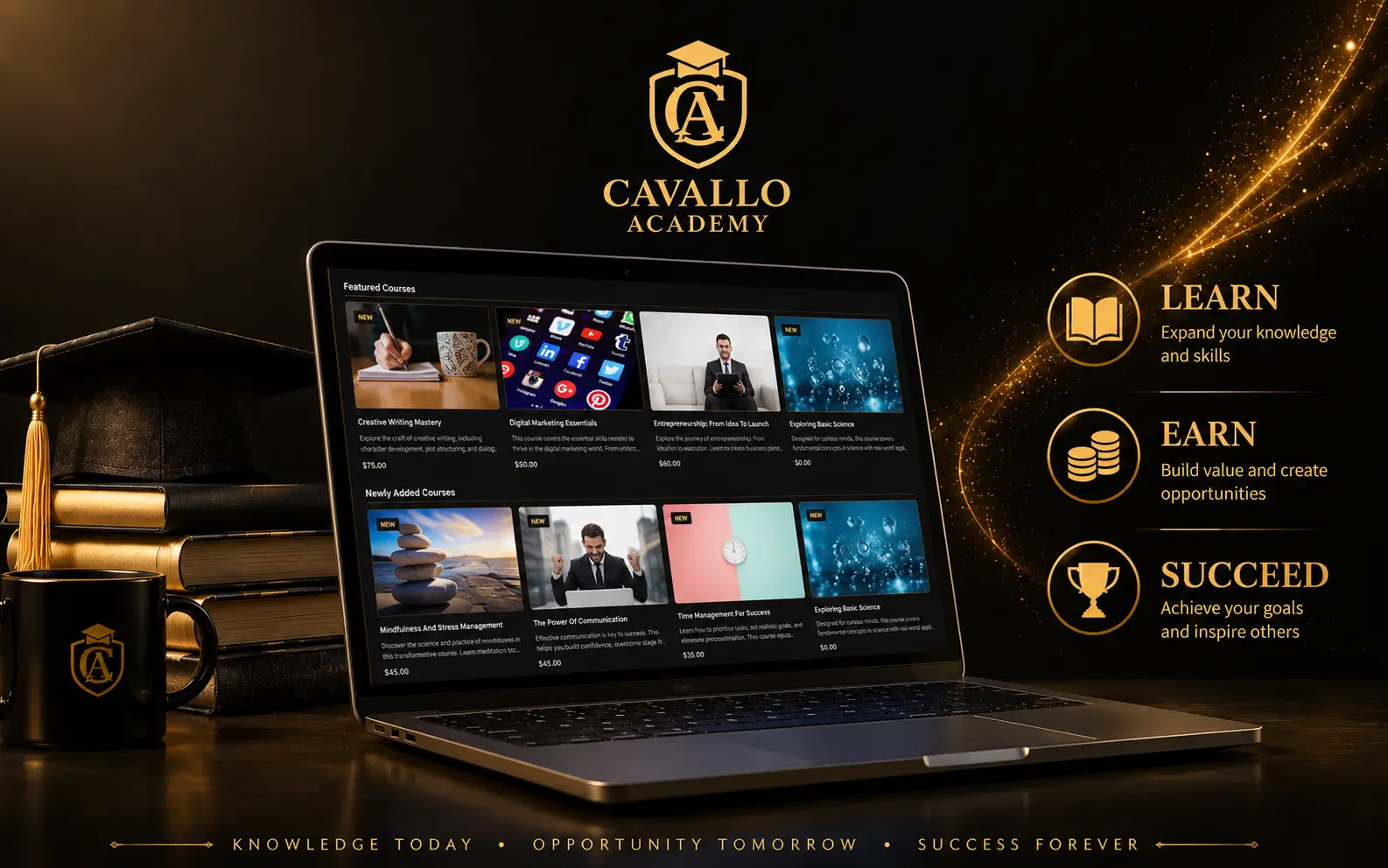
Cavalo Academy started with a clear goal: help people learn practical digital skills and earn from it. But without a structured system, this idea could not scale. There was no clear way to manage courses, track users, or support an earning model.
We built a platform that connects learning with a defined earning structure. By combining a centralized learning MLM system with a 2×3 matrix model, Cavalo Academy now runs as a single platform where users can learn, grow and earn through a structured setup.
Industry
EdTech
Country
🇩🇿 Algeria
Website
https://www.cavalo.academy/
Impact at a Glance
- Learning and earning now run within one system instead of being handled separately
- Users follow structured course paths instead of navigating strayed content
- Earnings are tied to a clear 2×3 matrix model instead of informal referrals
- Commissions are calculated and distributed automatically instead of manual handling
- Users can track both learning progress and earnings from a single dashboard
- Promoters and influencers have a defined system to bring in users and earn from it
- Content creators now have a direct way to publish courses and generate income
- The platform supports growth without breaking structure as more users join
Cavalo Academy: A Learning Platform That Pays
Cavalo Academy was built to help people learn skills that can lead to income. The focus was on areas like freelancing, marketing, e-commerce, and sales. The goal was not just to deliver courses but to create a system where users can apply what they learn and earn through it.
This required more than a typical learning setup.
It needed a structure that supported both education and income flow. Cavalo Academy aimed to bring these two parts together in a way that is simple to follow and can grow as more users join the platform.
Services Offered
- Online courses across freelancing, marketing and e-commerce
- Structured learning paths for different skill levels
- Referral based earning opportunities
- Content creator course publishing
- Membership based access to training programs
- Video based training and resources
- Project Scope
Cavalo Academy approached us with a clear direction but no system to support it. They wanted to build a platform where users could learn digital skills and earn through referral programs and course participation.
At that stage, their setup lacked structure. Courses were not organized into guided paths, and there was no centralized system to manage users or content. More importantly, there was no working earning model in place.
They needed a way to introduce a defined network structure where users could earn based on activity within the platform. This included handling user placement, tracking referrals, and calculating commissions across levels.
Alongside this, they required a learning system that could support multiple course categories, track user progress, and keep users engaged.
Our approach was to design a platform that connects both sides. We proposed a system that combines a centralized learning environment with a 2×3 matrix-based earning model.
This allowed Cavalo Academy to run learning and income generation within a single structure, making it easier to manage, scale, and maintain consistency as the platform grows
Where Things Broke: The Gaps That Slowed Down Growth
As Cavalo Academy began to expand, the limits of the existing setup became clear. What worked at a small scale started to break as more users, courses, and activity came in.
The platform lacked structure in both learning delivery and income handling.
This created gaps that affected user experience, growth, and consistency. Without a defined system, it became difficult to manage content, track users, and support an earning model. These issues were not isolated. They were connected, and each one slowed down the platform’s ability to grow in a stable and predictable way.
1. Difficulty in Navigation & Content Management
Courses were available across different topics, but there was no clear structure behind them. Content was not organized into a defined flow, which made it hard for users to follow a learning path.
Managing multiple categories, modules, and resources became difficult as more content was added.
There was no proper way to group lessons or maintain consistency across courses. This led to confusion for users and made content management harder for the team. As the platform grew, this lack of structure started to affect both usability and content quality.
2. No Central Learning System
There was no single system where users could access all learning materials. Content delivery was not unified, which created gaps in how users consumed courses.
Without a central dashboard, users had no clear place to view their enrolled courses or continue learning. This made the experience inconsistent and harder to manage.
It also limited the platform’s ability to scale since there was no base system to handle growing content and user activity in one place.
3. No Earning or Compensation System
The platform did not have a built-in way for users to earn. While the idea of combining learning with income existed, there was no structure to support it.
There was no defined model for referrals, no way to track user contributions, and no logic to connect activity with earnings. This made it difficult to attract users who were interested in income opportunities. Without a clear earning system, the platform could not deliver on one of its key goals.
4. Difficulty Implementing 2×3 Matrix Structure
The planned earning model required a 2×3 matrix structure, but there was no system to support it. Managing user placement manually was not practical. There was no logic to handle how users should be positioned within the network or how spillover should work.
Tracking relationships between users was also not possible. This made it difficult to build a structured network, which is essential for this type of model to function properly.
5. No Commission Automation
There was no system to calculate or distribute commissions. Any form of payout would require manual tracking, which increases the risk of errors. Handling multiple levels of commissions without automation is not sustainable as the number of users grows.
It was not clear for users to see their earnings or understand how they were calculated. This lack of transparency could affect trust and long-term engagement on the platform.
6. Limited Scalability
The existing setup was not built to handle growth. As more users joined and more transactions took place, the system would struggle to maintain consistency. There was no structure in place to support expanding networks or increased activity.
This created a risk where growth could lead to system instability instead of progress. Without a scalable setup, it would be difficult to move beyond the initial stage.
7. No Learning Progress Tracking
Users had no way to track their progress within courses. There was no system to mark completed modules or measure how far a user had progressed. This made it harder for users to stay engaged and complete courses.
Without visibility into progress, users could lose direction or drop off midway. For a learning platform, this directly affects the value users get from the system.
8. No Reward System for Creators & Promoters
There was no structured way to reward people who contributed to the platform’s growth. Content creators had no clear incentive to publish courses, and promoters had no system to track referrals or earnings.
This limited both content supply and user acquisition. Growth depended on manual effort rather than a defined system that encourages participation from both creators and promoters.
9. No Structured Learning Path
Courses were not arranged in a way that guided users from one level to the next. Beginners had no clear starting point, and there was no defined progression across topics.
This made learning feel unstructured and difficult to follow. Users had to figure out what to learn next on their own, which can lead to confusion and lower completion rates. A lack of guided paths reduced the effectiveness of the learning experience.
Building the System: Connecting Learning With a Working Earning Model
To bring Cavalo Academy’s idea into a working platform, the focus was on building a system where learning activity and income flow are directly linked. Each part was designed to work together, from how users access courses to how they earn through the network.
The platform runs as a single environment where users can learn, share, and earn without switching systems. Every action, from enrolling in a course to referring a user, connects back to a defined structure that keeps the platform stable as it grows.
Structured Course & Content Management
A clear content structure was created to organize courses into categories, modules, and lessons. Each course follows a defined format, making it easier for both users and admins to manage. Lessons, videos, and resources are grouped in a consistent way so users can move through content without confusion. This setup allows new courses to be added without breaking structure. It also reduces the effort required to manage large volumes of content as the platform expands across different topics.
- Courses are organized into a clear scalable structure that users can easily follow
Centralized LMS Platform
A unified dashboard was built to bring all learning activity into one place. Users can access their courses, continue lessons, and manage their learning without switching between sections. This creates a consistent experience across all content types. On the admin side, it provides a single control point to manage users, courses, and activity. The system supports multiple categories while keeping navigation simple, which helps both new and returning users stay engaged.
- All learning activity is managed from a single, easy-to-access dashboard

Built in Earning System
An earning layer was integrated so users can generate income through their activity on the platform. When users refer others or when purchases happen within their network, earnings are triggered based on defined rules. This connects participation directly with income opportunities. The system ensures that earning is part of how users engage rather than something separate. It gives users a clear path to grow their income while staying active within the platform.
- Users can earn through referrals and activity within a defined system

2×3 Matrix MLM Integration
The platform includes a 2-width matrix structure that manages how users are positioned within the network. User placement is handled automatically based on predefined logic, removing manual effort. The system also manages spillover, ensuring positions are filled correctly as the network grows. A genealogy view allows users to understand their network and track their position. This keeps the structure clear and reduces confusion as more users join.
- User placement and network structure are handled automatically within the matrix
Automated Commission Engine
A rule-based commission system was developed to handle payouts across three levels. When a transaction occurs, such as a course purchase or membership signup, the system calculates earnings for eligible users. This process runs automatically without manual input. Users can view their earnings and transaction details through their dashboard. This setup maintains consistency in payouts and reduces the risk of errors as transaction volume increases.
- Commissions are calculated and distributed automatically across all levels

Scalable System Architecture
The platform was built to support increasing user activity without affecting performance. It handles growth in users, transactions, and network size while maintaining consistency in operations. Key processes such as user placement, course access, and commission handling continue to function as expected even as the platform expands. This allows Cavalo Academy to scale without needing structural changes or system rework.
- The system supports growth without breaking structure or performance
Learning Progress Tracking
A tracking system was introduced to monitor how users move through courses. Each lesson and module can be marked as completed, giving users a clear view of their progress. This helps users stay focused and continue learning without losing track. Admins can also access progress data to understand engagement levels. The system supports better learning habits by showing users what they have completed and what comes next.
- Users can track their learning progress at every stage of a course
Influencer & Creator Reward System
Two earning paths were built into the platform. Influencers and promoters can refer users and earn based on sign-ups and purchases. At the same time, content creators can publish courses and earn from enrollments. Both roles are tracked within the system, ensuring accurate reward distribution. This setup supports both user acquisition and content growth without relying on manual processes.
- Both promoters and creators have clear, trackable ways to earn
Structured Learning Paths
Courses were arranged into guided paths based on topic and skill level. Users can start at a basic level and move forward step by step without confusion. Each path is designed to build knowledge in sequence making learning more focused. This allows new users to get started quickly and continue without confusion. As more courses are added they fit into this structure without disrupting the flow.
- Users follow clear learning paths from beginner to advanced levels

Before vs After: What Changed
| Area | Before | After |
| Course Management | No clear structure | Structured course hierarchy |
| Learning Access | Disconnected access points | Single dashboard access |
| Earning Model | No defined earning model | Built-in earning system |
| User Placement | No placement logic | Automated 2×3 matrix |
| Commission Handling | Manual calculations | Automated payouts |
| Scalability | Not built for growth | Supports growing users |
| Progress Tracking | No progress visibility | Trackable course progress |
| Creator & Promoter Rewards | No reward system | Defined earning roles |
| Learning Flow | No guided progression | Structured learning paths |
Why a 2×3 Matrix Model Was Chosen for This Platform
The earning model had to be simple enough for new users to understand, but structured enough to control growth.
So, what we implemented for Cavalo was a 2×3 matrix compensation plan, which fits well within this balance. It limits how users are placed while still allowing expansion through network depth. This makes it easier to manage compared to open-ended structures. It also creates a clear path for users to see how their network grows and how income is generated.
For Cavalo Academy, this model supports steady expansion, keeps the system predictable, and avoids the confusion that often comes with more complex compensation setups.
Fixed Width Structure
Each user can have only three direct positions, which keeps the network organized and prevents uncontrolled expansion at the first level.
Level-Based Earnings
Income is distributed across three levels, giving users earning potential beyond direct referrals within a clearly defined structure.
Automatic User Placement
New users are placed into the matrix based on system logic, removing manual dependency and keeping the structure consistent.
Spillover Handling
When direct positions are filled, additional users are placed under the network, allowing team-based growth within the system.
What We Built: Key Features That Power the Platform
To make the platform work as intended, the focus was on building systems that handle both learning activity and network-driven earnings without conflict.Each part was designed to operate as a connected layer rather than a standalone feature. This ensures that user actions, content delivery, and income logic stay aligned at all times.
The goal was to create a setup where admins can manage operations without friction and users can move through the platform with clarity. These systems form the base that keeps the platform stable as usage increases.
Matrix MLM System with Genealogy Tree
A matrix-based system was built to manage user relationships and network flow. Each user is placed within a defined structure, and their position is tracked through a visual genealogy tree. This allows users to understand how their network is formed and how activity moves through it. The system maintains accuracy in placement and ensures that the structure remains consistent as more users join.
Automated Commission Engine
A commission engine was set up to process earnings based on predefined rules. It tracks transactions within the network and assigns payouts to eligible users across levels. The system runs without manual input and records each transaction for reference. Users can view their earnings history, which keeps payout tracking clear and reduces dependency on manual calculations.
Course & Module Management System
A system was developed to manage courses, modules, and lesson content in a structured format. Admins can create, update, and organize content across categories with consistency. Courses are split into smaller sections, making it easier to manage changes and updates. This setup supports the continuous expansion of content without affecting how it is delivered.
Learning Progress Tracking System
A tracking layer was added to monitor how users move through course content. It records completed lessons and shows progress at each stage. This helps users stay aware of their position within a course. It also gives admins visibility into user activity, which can be used to understand engagement patterns and improve course structure where needed.
Influencer Referral Tracking
A referral tracking system was introduced to monitor how users bring others into the platform. Each referral is recorded and linked to the user who shared it. The system tracks sign-ups and activity connected to these referrals, ensuring that contributions are properly recorded. This creates a clear structure for user-driven growth within the platform.
Content Creator Monetization System
A system was built to allow creators to upload and manage their own courses. It tracks enrollments and assigns earnings based on course performance. Creators can manage their content while the system handles user access and tracking. This setup supports content growth by giving creators a direct link between their work and the income generated on the platform.
Video Hosting & Streaming
The platform includes a video system that supports course delivery across devices. Videos are organized within lessons and can be accessed without disruption. It is designed to manage simultaneous streaming by multiple users. This ensures that course delivery remains stable as user activity increases.
Membership & Access Control
Access control was implemented to manage how users enter and move through the platform. User access to content and features depends on their membership level. This helps the platform control access to both free and paid content. It also ensures that users only interact with content that matches their level or purchase.
Multi Device Compatibility
The platform was built to work across different devices, including mobile and desktop. Users can access courses, track progress, and manage their activity without restriction to a single device. The interface adjusts to different screen sizes, making it easier for users to stay active regardless of how they access the platform.
From Idea to Live Platform: How the System Was Put Together
Cavalo Academy came in with a clear direction, but turning that into a working platform required structured execution and constant alignment. At Integrated MLM Software, we focused on keeping communication direct at every stage.
Each step was discussed, validated, and then executed. Instead of long development cycles, we broke the project into smaller phases so Cavalo Academy could review progress and give input early.
This reduced rework and kept expectations clear. The goal was to make sure what was planned matched what was delivered, both in learning flow and earning logic.
Project Scope and Base Plan
We worked with Cavalo Academy to define how users should move through the platform from joining to earning. This helped lock the base structure before development started.
What All Customizations Included
01. Requirement Breakdown & Alignment
We started by breaking down Cavalo Academy’s idea into clear system requirements. Each part was discussed in detail to avoid gaps before moving into execution.
02. Platform Flow Mapping
We mapped the full user journey, from sign-up to earning. This helped both teams agree on how users should move through the platform.
03. Matrix Model Finalization
The earning structure was finalized through discussion and validation. We aligned on how placement, levels, and growth should behave before configuring the system.
04. Commission Logic Mapping
We worked closely with the Cavalo team to define how earnings should be triggered. Every rule was reviewed to ensure clarity before implementation.
05. Learning Flow Structuring
Course flow and user journey were planned together. This ensured that content delivery matched how users are expected to progress on the platform.
06. Referral Flow Setup
We mapped how users enter the system through referrals and how they connect within the network. This was tested with real scenarios before the final rollout.
07. Creator Workflow Setup
We defined how creators will add and manage content. This included how their earnings connect with enrollments and user activity.
08. Access Control Decisions
Membership and access rules were discussed and finalized based on how Cavalo Academy wanted to control user entry and content availability.
09. Testing with Real Use Cases
Before launch, we tested the system using actual user scenarios. This helped Cavalo Academy verify that both learning and earning flows work as expected.
10. Final Deployment & Handover
The platform was launched after final approval with clear handover support. Cavalo Academy was guided through system usage to ensure smooth day-to-day operations.
What Changed After Launch: Growth, Engagement and Earnings
The platform moved from a working setup to a system that supports consistent user activity, network growth and income generation.
Stronger User Engagement
Users stayed active for longer periods as they could follow clear learning paths and track their activity. This reduced drop-offs and improved how users interacted with courses and the platform on a regular basis.
Consistent Network Growth
User acquisition became more stable as referrals started flowing through a defined structure. New users were added in a predictable way, which helped maintain balance in the network as it expanded.
Reliable Earning Flow
Earnings were generated based on user activity within the system. This created a steady flow of income opportunities, giving users a clear reason to stay active and continue engaging with the platform.
Better Content Participation
More users started contributing content and promoting the platform. This increased the range of available courses and helped expand the platform without relying only on internal efforts.
Results & Outcomes
- Increased user engagement and retention: Users stayed active longer due to clear learning flow and visible progress tracking
- Strong user growth via referrals: New users joined through structured referral flow supporting steady and trackable expansion
- New revenue stream for creators: Course creators earned from enrollments, encouraging more content contributions
- Automated and error free commission distribution: Earnings were calculated accurately without manual intervention or delays
- Improved course completion rates: Users followed guided paths leading to higher completion across multiple course categories
- Scalable system for learning and earning: Platform handled increased users and activity without affecting performance
- Improved market positioning: Cavalo Academy positioned itself as a platform combining skill-based learning with income opportunities
What Makes Cavalo Academy Different From Typical MLM Platforms
Most learning platforms focus on delivering courses with limited connection between user activity and platform growth. Cavalo Academy combines structured learning with a built-in network model where user actions, content, and earnings are part of the same system. This creates a setup where users stay active, contribute, and grow within a defined structure instead of using disconnected tools.
- Traditional platforms manage users and referrals separately, while Cavalo uses a built-in 2×3 matrix model where user placement and growth are part of the system.
- Learning progress is usually tracked in isolation, while Cavalo’s learning progress tracking system keeps users engaged within a structured flow.
- Referral tools are often external add-ons, while Cavalo has referral tracking integrated directly into the platform logic.
- Content platforms host courses, while Cavalo supports content creator monetization linked to actual enrollments and user activity.
- Standard setups require manual handling or multiple tools for payouts, while Cavalo uses automated commission distribution within the same system.
- Most platforms handle learning and user growth separately, while Cavalo connects both through a single structure that supports learning, earning, and network expansion.
Conclusion
Many learning platforms face the same issue. Users join, consume content, and leave, which limits growth and repeat activity.
For Cavalo Academy, we built a system that connects learning with a structured earning model, turning users into active participants instead of passive learners. This is where an MLM model fits well for edtech platforms.
It gives a clear structure for referrals, supports user-driven growth, and ties platform activity directly to revenue.
Instead of relying only on ads or one-time sales, platforms can grow through their own user base. With the right matrix MLM software, learning, user acquisition, and earnings work together, making the platform easier to scale and sustain over time.
